
Condenser Coil Anti-Corrosion Coating
Where it corrodes first
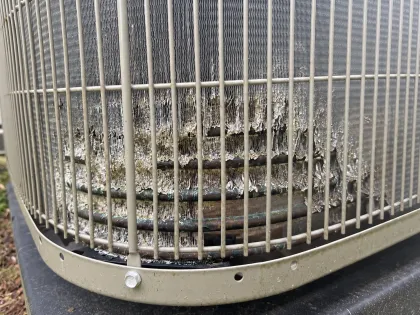
Air inlet face
The fan pulls air in through this face, so it collects the most salt and dust and corrodes first.
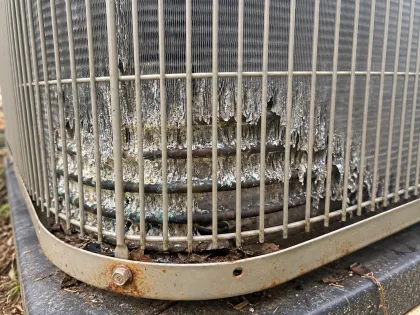
Bottom rows
Rainwater, debris and deposits collect at the base of the coil, which stays wet longer than the rest.
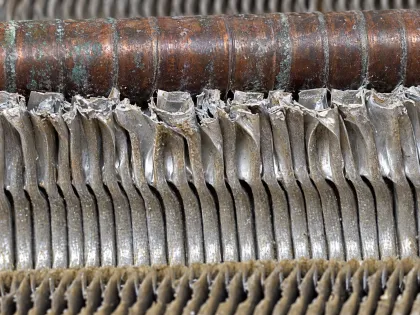
Fin-to-tube joints
On copper-tube coils the aluminium fin corrodes around every collar once a salt film forms.
Illustrative images of typical corrosion at each location
Recommended system by exposure
Starting point for selection. The final specification also depends on fin density, bake limits and target service life.
| Exposure | ISO 9223 | Recommended | Alternative | Why |
|---|---|---|---|---|
| Coastal | C4C5 | PG-S1 | PG-W | Dip before shipment where the coil can be removed or bought loose. |
| Desert heat, sand and salt | C4C5 | PG-S1 | PG-C | Salt and abrasive dust together; clean with low-pressure water. |
| Tropical humid | C3C4 | PG-W | PG-S1 | |
| Industrial atmosphere | C4C5 | PG-S1 | PG-C | Move to PG-C where acid gases or chemical splash are present. |
| Wastewater H₂S | C5 | PG-C | — | Sulphide attacks copper quickly; a thicker chemical-resistant film is needed. |
How it is coated
Dip Coating for Finned Heat Exchangers
Full-immersion dip coating for new finned coils — coverage deep in the core and at the fin roots, with film thickness controlled by drain-off.
Spray Coating for HVAC Coils
Spray coating for coils that are too large to dip, already assembled, or need a thicker chemical-resistant film on specific areas.
Full-Unit Corrosion Protection for Outdoor Units
Complete outdoor units disassembled, masked, coated with an air-dry system, reassembled and function-checked before shipment.
Pre-Shipment Coil Coating in China
HVAC coils and outdoor units sourced from China, coated on partner lines before loading — coating selected for site corrosivity, with a batch QC report.
Why the condenser goes first
A condenser fan moves a large volume of outdoor air across the coil every hour it runs. Whatever the air carries — salt aerosol near the sea, fine dust inland, sulphur and nitrogen oxides near industry — is deposited on the fins. Humid nights then turn those deposits into a wet, conductive film.
Choosing the system
Loose coils that can be baked get a thin film applied by dip before they are built into units or loaded. Coils already built into complete units are coated with an air-dry system after the electrical parts are masked. Sites with acids or sulphide move to the thicker chemical-resistant film.
Related
- CoatingsWaterborne Polysiloxane (Sol-Gel) Coil Coating
- EquipmentCopper Tube, Aluminium Fin Coil Protection
- EnvironmentsCoastal HVAC Corrosion by Distance from the Sea
- GuidesCan a Condenser Coil Be Coated After Manufacturing?
- CoatingsWaterborne Two-Component Coil Coatings
- EquipmentMicrochannel Coil Corrosion Protection
Also see

Should the condenser be coated if the evaporator is indoors?
The condenser is the priority because it sees the outdoor atmosphere. Indoor evaporators need coating mainly in humid, polluted or fresh-air applications.
Can a condenser coil be coated after it is built into the unit?
Yes, by spray with an air-dry system after masking, or by removing the coil and dipping it. Dipping gives better coverage.
Tell us the equipment, the site and the destination port. We reply within 24 hours.