
Our Coating Process
Rules that apply to every order
- Complete units never go into a curing oven. They are coated with an air-dry system after masking, or the coil is removed and cured on its own.
- Two-component coatings have a pot life. Mixes are made per shift, and the mix ratio and time are logged.
- Dip tanks are not shared between waterborne and solvent-based systems.
- Cure is always recorded. Under-cure is the most common cause of coating failure, so the cure record is a required QC item.
The 14 steps
Every step leaves a record; together they make the batch report.
- 01
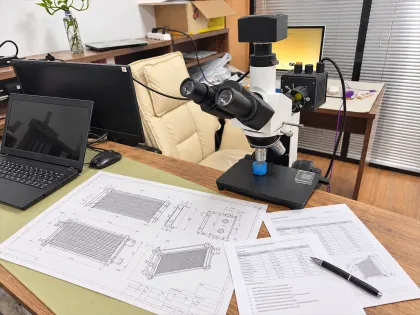
Enquiry & data review
Equipment type, materials, dimensions, quantity, destination and site exposure.
- Record
- RFQ record
- Responsible
- Pelagard
- 02
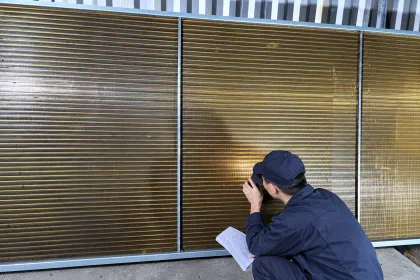
Coating selection & first article
A system is selected from the four PG systems, or the customer’s specified coating is reviewed for compatibility. New customers and new systems start with a coated first article.
- Record
- Coating specification (system, film thickness, cure); first-article report, customer sign-off
- Responsible
- Pelagard + partner line
- 03
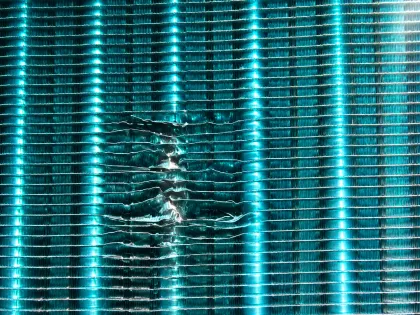
Incoming inspection
Appearance, fins and tubes checked and photographed; pressure test where required.
- Record
- Incoming inspection sheet, photos
- Responsible
- Partner line
- 04
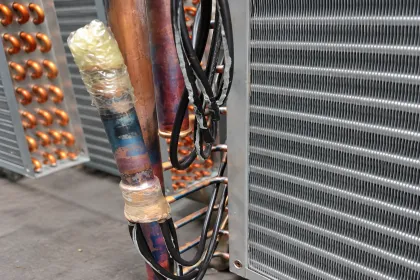
Disassembly & masking
Complete units have panels removed; controls, sensors, valves and connections are masked.
- Record
- Masking checklist
- Responsible
- Partner line
- 05
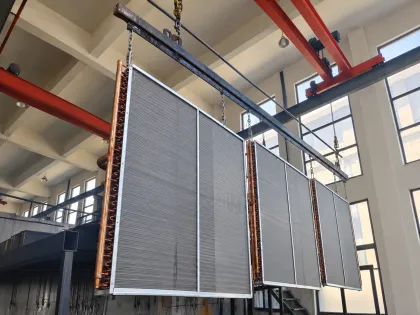
Racking
Coils are hung on the line’s carriers, so they can be lowered into each tank and drain freely afterwards.
- Record
- —
- Responsible
- Partner line
- 06
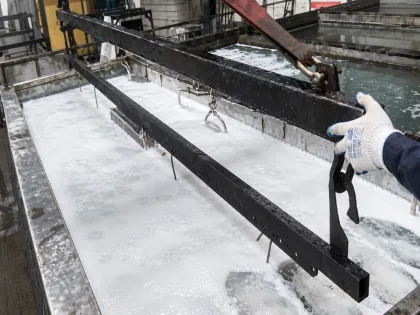
Cleaning & degreasing
Alkaline cleaner or thermal degreasing removes oil and forming lubricant, followed by a deionised-water rinse and optional copper and aluminium passivation.
- Record
- Cleaning parameters
- Responsible
- Partner line
- 07
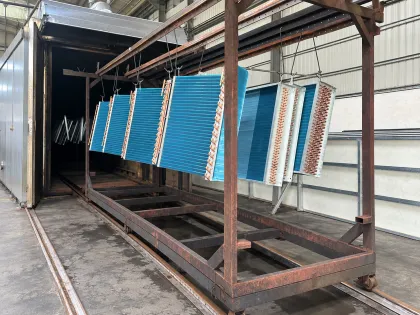
Drying
Coils are dried free of water, oil and dust before coating.
- Record
- —
- Responsible
- Partner line
- 08
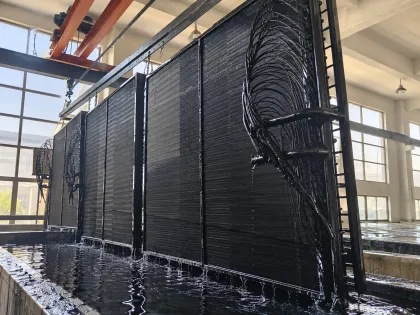
Coating
Dip, spray or flood coating, with film thickness controlled to the specification.
- Record
- Coating batch number, mix ratio, viscosity
- Responsible
- Partner line
- 09
Fin clearing
Compressed air clears excess coating from between the fins while it is still wet, so dense fin packs are not bridged.
- Record
- —
- Responsible
- Partner line
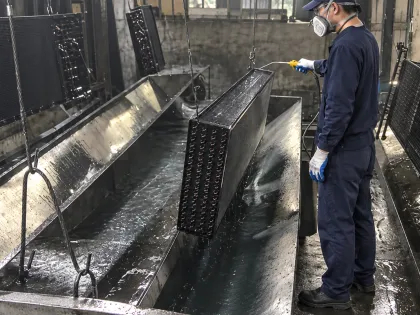
- 10
Drain-off & flash-off
Coils hang over the drain tray until the film has stopped dripping and flashed off.
- Record
- —
- Responsible
- Partner line
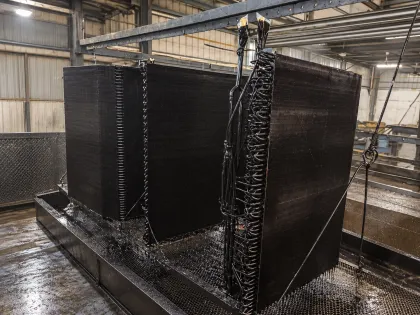
- 11
Cure
Oven cure to part temperature, or ambient cure for parts that cannot be baked.
- Record
- Cure temperature profile or time log
- Responsible
- Partner line
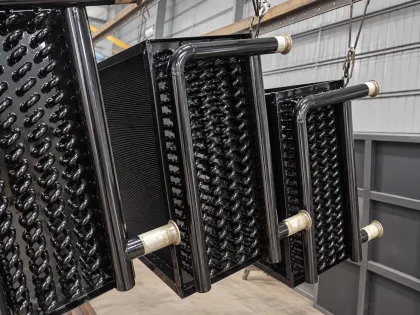
- 12
Film thickness & coverage check
Film thickness, coverage, fin bridging, missed areas and cure state.
- Record
- QC report, photos of critical areas
- Responsible
- Pelagard
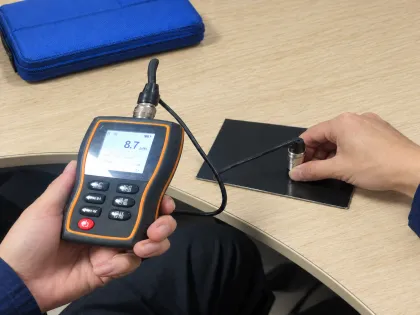
- 13
Adhesion test
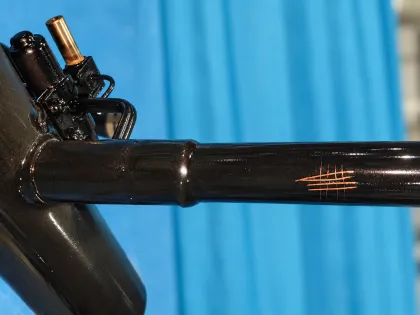
Cross-cut adhesion is tested on panels cured with the batch.
- Record
- Adhesion result in the QC report
- Responsible
- Pelagard
- 14
Reassembly, packing & batch report
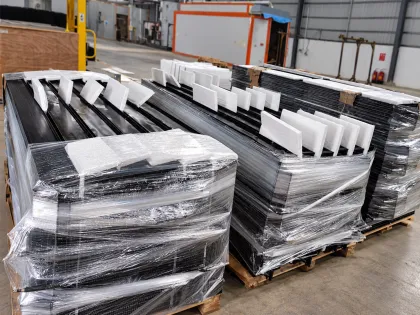
Units that were taken apart are reassembled, unmasked and function-checked. Goods are packed against moisture and impact for sea freight, and every record above is compiled into one report that ships with them.
- Record
- Reassembly checklist, packing photos, project report (PDF), shipping documents
- Responsible
- Pelagard + partner line

Who does the coating work?
Partner coating lines in South China apply the coating. Pelagard specifies the system, reviews the first article, spot-checks QC and issues the batch report.
Can I witness a step?
Yes. You or a third-party inspector can attend the first article or any production batch, or approve from photo and thickness records.
Tell us the equipment, the site and the destination port. We reply within 24 hours.