
Cold Room and Refrigeration Evaporator Coating
Where it corrodes first
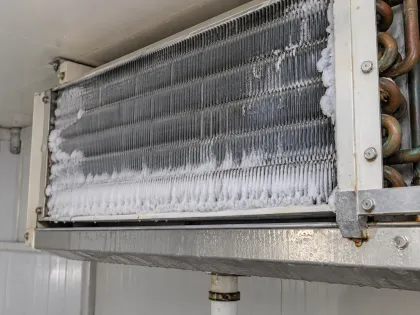
Air inlet face and first rows
Frost forms first on the inlet side, and meltwater during defrost carries deposits over the coil.
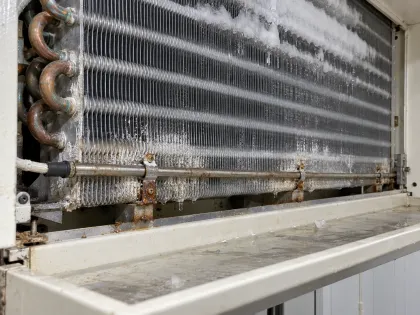
Heater elements and drain pan area
Defrost heaters and drain pans see the widest temperature swings and standing meltwater.
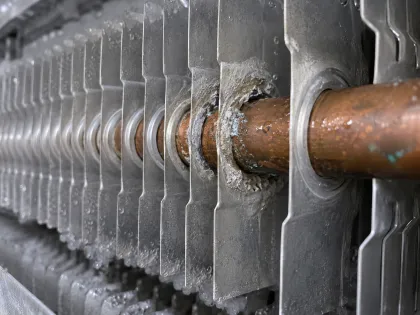
Fin-to-tube joints
On copper-tube coils, repeated wetting keeps an electrolyte film at every fin collar.
Illustrative images of typical corrosion at each location
Recommended system by exposure
Starting point for selection. The final specification also depends on fin density, bake limits and target service life.
| Exposure | ISO 9223 | Recommended | Alternative | Why |
|---|---|---|---|---|
| Food processing with washdown | PG-C | PG-S1 | Confirm resistance to the plant's cleaning chemicals. | |
| Fish, meat and salted-food storage | PG-S1 | PG-C | Salt and organic acids in the air; frequent defrost. | |
| Coastal cold stores | C4C5 | PG-S1 | PG-W | |
| Ammonia plant rooms | C5 | PG-C | — | Ammonia attacks copper; review coil material too. |
How it is coated
Dip Coating for Finned Heat Exchangers
Full-immersion dip coating for new finned coils — coverage deep in the core and at the fin roots, with film thickness controlled by drain-off.
OEM Contract Coating for Coil Manufacturers
Contract dip and spray coating for coil and unit manufacturers — coating to your specification on partner lines in South China, with batch records.
Pre-Shipment Coil Coating in China
HVAC coils and outdoor units sourced from China, coated on partner lines before loading — coating selected for site corrosivity, with a batch QC report.
What makes refrigeration coils different
A cold room evaporator runs below freezing, frosts over and defrosts on a timer. Each defrost wets the whole coil with meltwater and then refreezes it, so the coil sees wet–dry and hot–cold cycles far more often than an air-conditioning coil.
Food plants
Processing and storage areas carry salt, food acids and organic vapours, and are washed down with alkaline or chlorinated cleaners. Coating choice depends as much on the cleaning regime as on the air.
Film thickness
Evaporators often have wider fin spacing to allow for frost, which gives more room for film build. Even so, the coating must not bridge fins or slow defrost drainage.
Related
- CoatingsWaterborne Polysiloxane (Sol-Gel) Coil Coating
- EquipmentHeat Pump Coil Protection
- EnvironmentsCoastal HVAC Corrosion by Distance from the Sea
- GuidesHow to Clean Coated Coils Without Damaging the Coating
- CoatingsAir-Dry Two-Component Chemical-Resistant Coating
- EquipmentEvaporator Coil Coating
Also see

Does the coating survive freezer temperatures?
The film must tolerate repeated cycling between low temperature and defrost. PG-S1 has thermal-cycling data from −60 °C to 150 °C over 100 cycles without cracking.
Which cleaning chemicals are safe on coated coils?
Neutral cleaners are safest. Send the plant's cleaning chemical data sheets with the enquiry so resistance can be checked.
Tell us the equipment, the site and the destination port. We reply within 24 hours.